
Shankar Vedantam
Host of Hidden Brain
Shankar Vedantam is an American journalist, writer, and science correspondent best known as the host and creator of **Hidden Brain**. His work focuses on human behavior, unconscious bias, and the social sciences, and he also authored *The Hidden Brain* and *Useful Delusions*. He previously worked at *The Washington Post* and has long reported on how hidden mental patterns shape choices and relationships.
Products they talk about
Against Empathy: The Case for Rational Compassion💬 Mentioned
…discussing psychological research on limitations and biases in empathy
“The psychologist Paul Bloom who wrote the book Against Empathy the case for rational compassion he argues that empathy tends to be parochial and it tends to be biased and that's why when we ask people to be empathic we're really inviting them to be prejudiced”
on Hidden Brain
Dopamine Nation💬 Mentioned
…introducing the guest and her primary work on dopamine and addiction
“Psychiatrist Anna Lemke is the author of Dopamine Nation, Finding Balance in the Age of Indulgence. She argues that when we seek out pleasures on a non-stop basis, whether those pleasures are legal indulgences or illegal substances, we mess with the neurochemistry of the brain.”
on Hidden Brain
Fifty Shades of Grey💬 Mentioned
…anna lembke's personal experience with romance novel addiction
“At one point, she found herself swept up in the novel Fifty Shades of Grey. The story, later made into a movie, revolves around a sadomasochistic relationship between a college student and a business tycoon... I asked Anna what drew her to the book. I'm honestly not even sure I know, because it didn't really matter when I was reading it. That is to say, like, the plot and the characters mattered not at all. I was reading it for the sex scenes.”
on Hidden Brain
Invisible Man💬 Mentioned
…discussing the novel about feeling overlooked and invisible in society
“This is Hidden Brain. I'm Shankar Vedantam. I am invisible, understand, simply because people refuse to see me. So says the protagonist in Ralph Ellison's 1952 novel, Invisible Man. Readers never learn the character's name, but they are invited to experience his life.”
on Hidden Brain
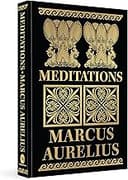
Meditations👍 Recommends
…discovering stoic philosophy through marcus aurelius during a life crisis
“During this time of upheaval in your life, you found consolation and guidance in an unexpected source. It was a book you had encountered many years earlier in college. But rereading it this time, you felt like it was speaking directly to you. What was this book, Massimo? The book was The Meditations by Marcus Aurelius, which is a Stoic book.”
on Hidden Brain
Negotiation, The Game Has Changed💬 Mentioned
…introducing max bazerman and his book on negotiation strategy and behavioral science
“Max Bezeman offers a different approach. He is at Harvard Business School and author of the book, Negotiation, The Game Has Changed. Max says instead of focusing on our goals, we should focus on our blind spots.”
on Hidden Brain
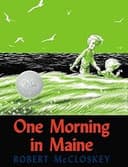
One Morning in Maine👍 Recommends
…discussing how reframing setbacks helps children see them as normal parts of growth
“So there's another kind of wise intervention that you call reframing. And there's a story you used to read to your daughter, Lucy, called One Morning in Maine. Tell me the plot of One Morning in Maine and how it relates to this idea of reframing. Yeah, One Morning in Maine is the classic story from Robert McCloskey. And it's a story of Sal, who's a young child. And she is very eager to go with her father to Bucks Harbor for the day. But she wakes up with a loose tooth.”
on Hidden Brain
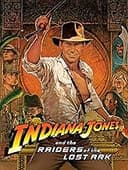
Raiders of the Lost Ark👍 Recommends
…discussing the gory and violent scenes from Indiana Jones movies that fascinated him as a child
“Colton, as a kid, I understand that your favorite movies were those featuring Indiana Jones, such as Raiders of the Lost Ark and The Temple of Doom. What scenes in particular were you drawn to in these movies? Yeah, I loved those movies as a kid. I still love them as an adult. I've probably lost count of how many times I've seen them.”
on Hidden Brain
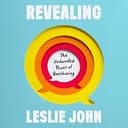
Revealing: The Underrated Power of Oversharing👍 Recommends
…introducing psychologist leslie john and her book about disclosure and oversharing
“Leslie John is a psychologist at Harvard University and the author of Revealing, the underrated power of oversharing. We talked with her on two recent episodes of the show. They were titled Keeping Secrets and Coming Clean. Today, Leslie returns to the show to respond to listener comments and stories about the costs of keeping secrets.”
on Hidden Brain
Revealing: The Underrated Power of Oversharing💬 Mentioned
…introducing leslie john as expert on self-disclosure and vulnerability
“Leslie is the author of revealing the underrated power of oversharing today she joins us for listeners questions and stories about what happens when we let another person in and unburden ourselves of our secrets”
on Hidden Brain
The Marketing of Debt, How They Get You💬 Mentioned
…discussing john dinsmore's book on psychology of debt and financial decision-making
“In his book, The Marketing of Debt, How They Get You, John Dinsmore says that being good with money isn't just about knowing what to do on paper. It's also about resisting the forces that lure us into self-sabotage.”
on Hidden Brain
The Power of Us💬 Mentioned
…discussing how group identities shape behavior and social dynamics
“In their new book, The Power of Us, the psychologists Jay Van Bevel and Dominic Packer explore how group identities pull us together and how they tear us apart. They also look at how we can apply what we have learned about the science of group identity to build a better world.”
on Hidden Brain
The Top Five Regrets of the Dying👍 Recommends
…exploring what people regret most at the end of their lives
“There was a book by the hospice care nurse, Bronnie Ware, titled The Top Five Regrets of the Dying. What were these regrets, Leslie? Yes. So Bronnie Ware, my hero, she has spent, as a palliative care nurse, she spent time, a lot of time with people at the very end of their lives. So she gets to know them a lot. And she wrote a book where she collated her observations on what people tended to regret.”
on Hidden Brain